
Certification training
IAQH HVAC Mold Inspection Certification
About eight hours of training turns service calls you're already running into a documented mold assessment you can charge for.
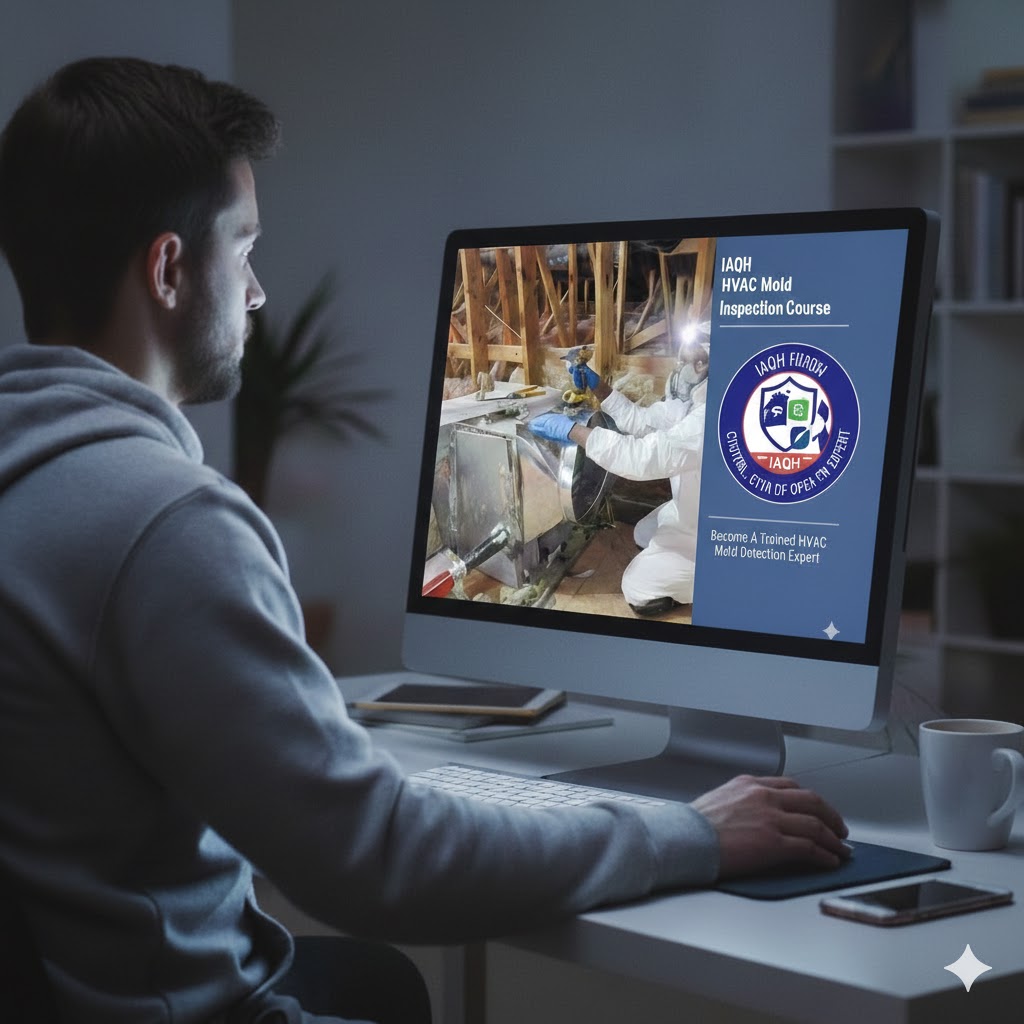
Learn a repeatable method for inspecting returns, supplies, air handlers, plenums, and ducts. Record findings as you inspect, and the AI-assisted Mold Sentinel workflow assembles them with your laboratory results into a report you review and approve.
No extra trip. No evening spent writing it up.
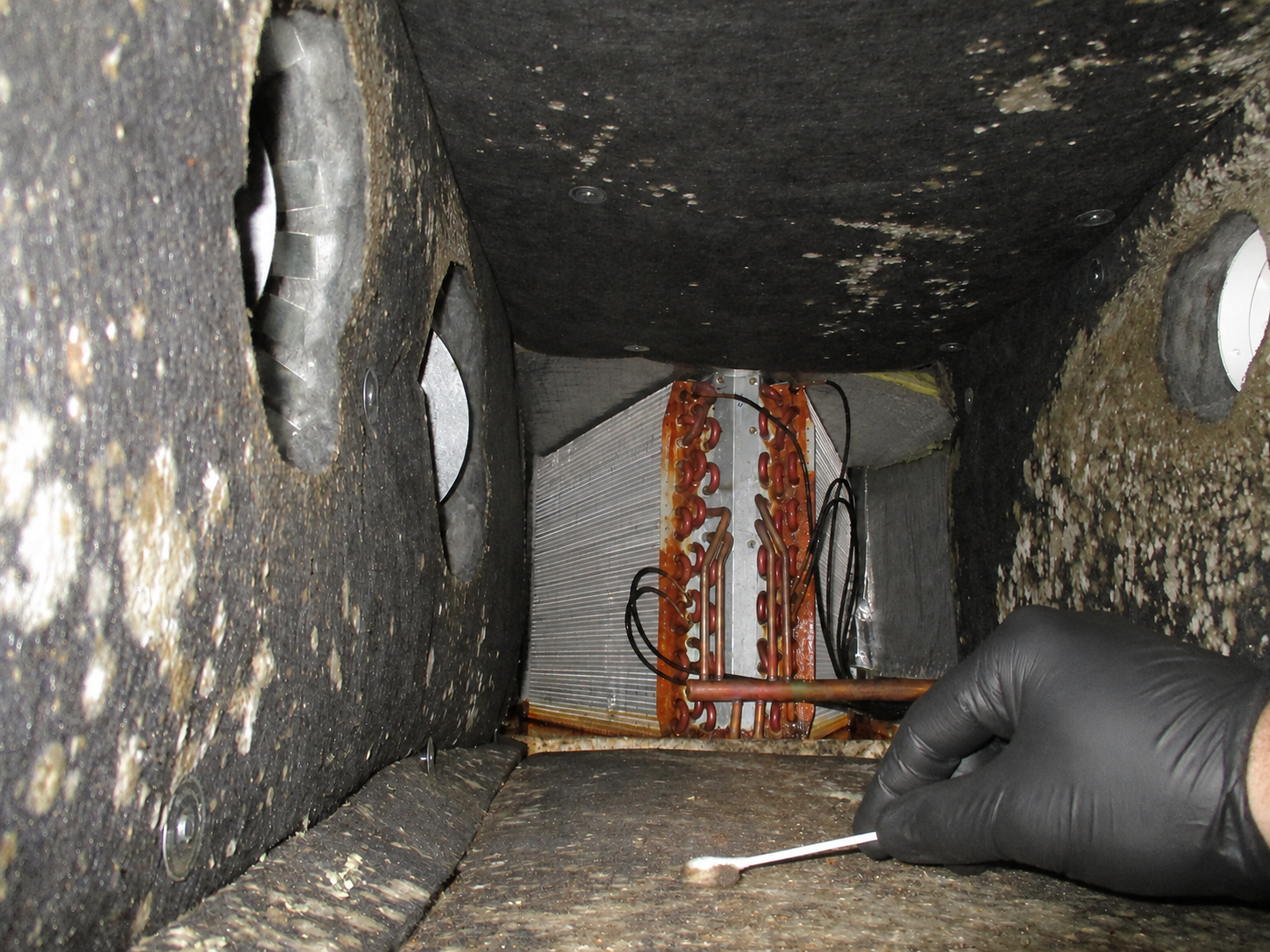
10
Modules
8 hours
Instruction
200 pages
Written reference
3
Laboratory analyses
1
Field assignment
1 year
Course access
Approximately eight hours of narrated instruction plus written study, knowledge checks, Mold Sentinel practice, the final examination, and the field assignment — roughly ten hours of total course work.
The inspection system
Six connected frameworks turn what you see in the field into consistent decisions and defensible language.
Inspection route
RSAPD
Follow the air through Returns, Supplies, Air Handler, Plenums and Ducts.
Condition decision
Component Status
Assign Green, Yellow or Red at the component level.
The cause
MATE
Evaluate Moisture, Accumulated Dust, Temperature and Ecology.
Corrective plan
MAP
Connect the material and condition to corrective and preventive action.
Action language
CRUM
Clean, Repair or Replace, Upgrade and Maintain.
Field report
Mold Sentinel
Organize observations, photographs, samples, decisions and recommendations.
Ten modules, three phases
Phase 1 · Modules 1–3
Learn the system
Understand the problem, learn the IAQH professional language, and establish the complete inspection and documentation workflow.
Phase 2 · Modules 4–8
Inspect the system
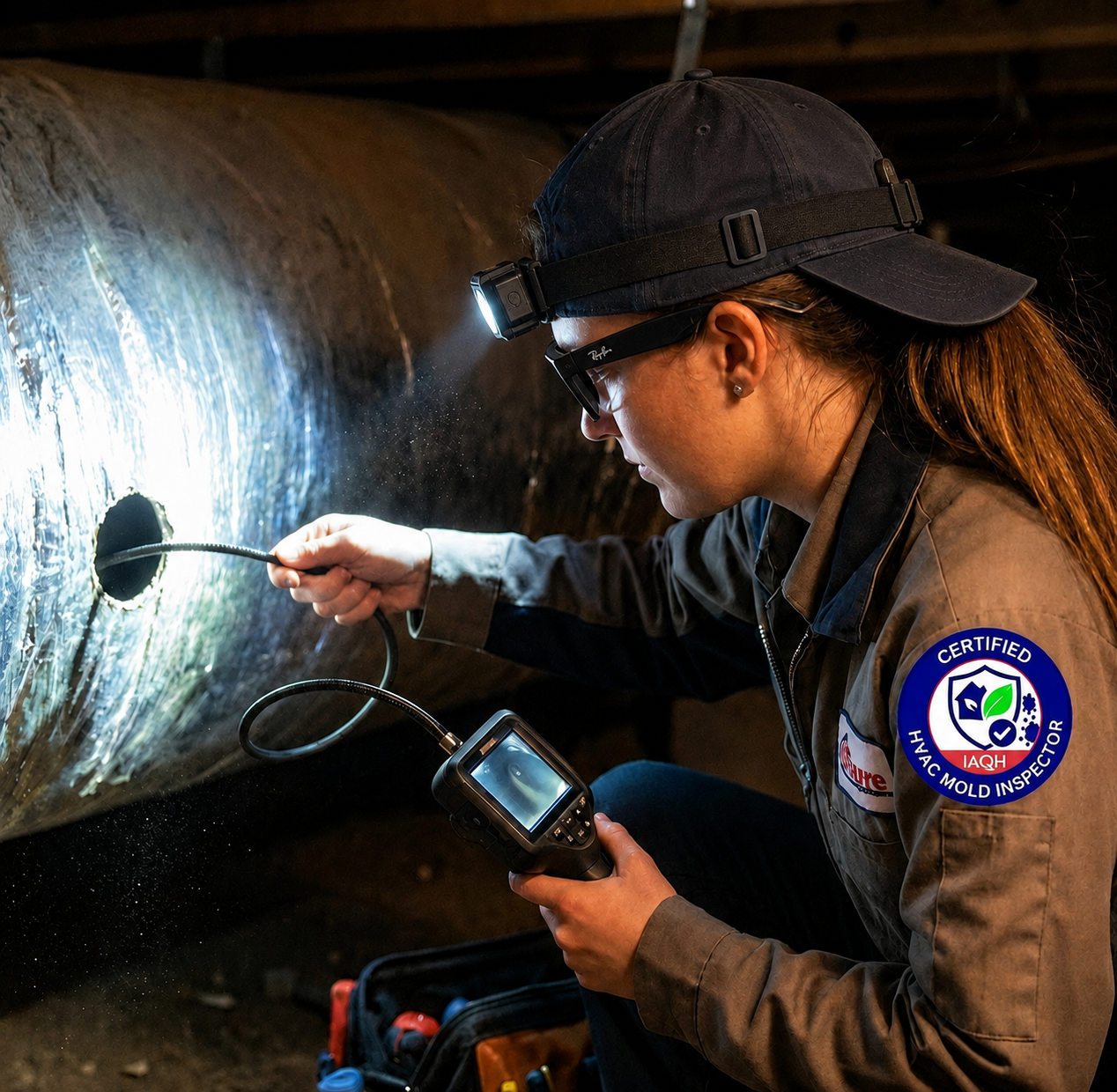
Follow the RSAPD route through Returns, Supplies, Air Handling Unit, Plenums, and Ducts.
Phase 3 · Modules 9–10
Confirm and deliver
Collect defensible laboratory samples, connect findings across the system, and deliver professional results.
Complete course outline (PDF)
All ten modules, the field assignment, enrollment package, and certification requirements in one downloadable document.
The certification field assignment
Step 1
Inspect
Complete and document the HVAC inspection in Mold Sentinel.
Step 2
Sample
Collect the three required samples following the current protocol.
Step 3
Submit
Return all three samples together using the prepaid label.
Step 4
Combine and review
Receive one custom laboratory-supported report for assignment review.
The estimated delivery of the completed laboratory-supported report is within 72 hours after the samples are received by the laboratory.
The deliverable
See the report your customer receives
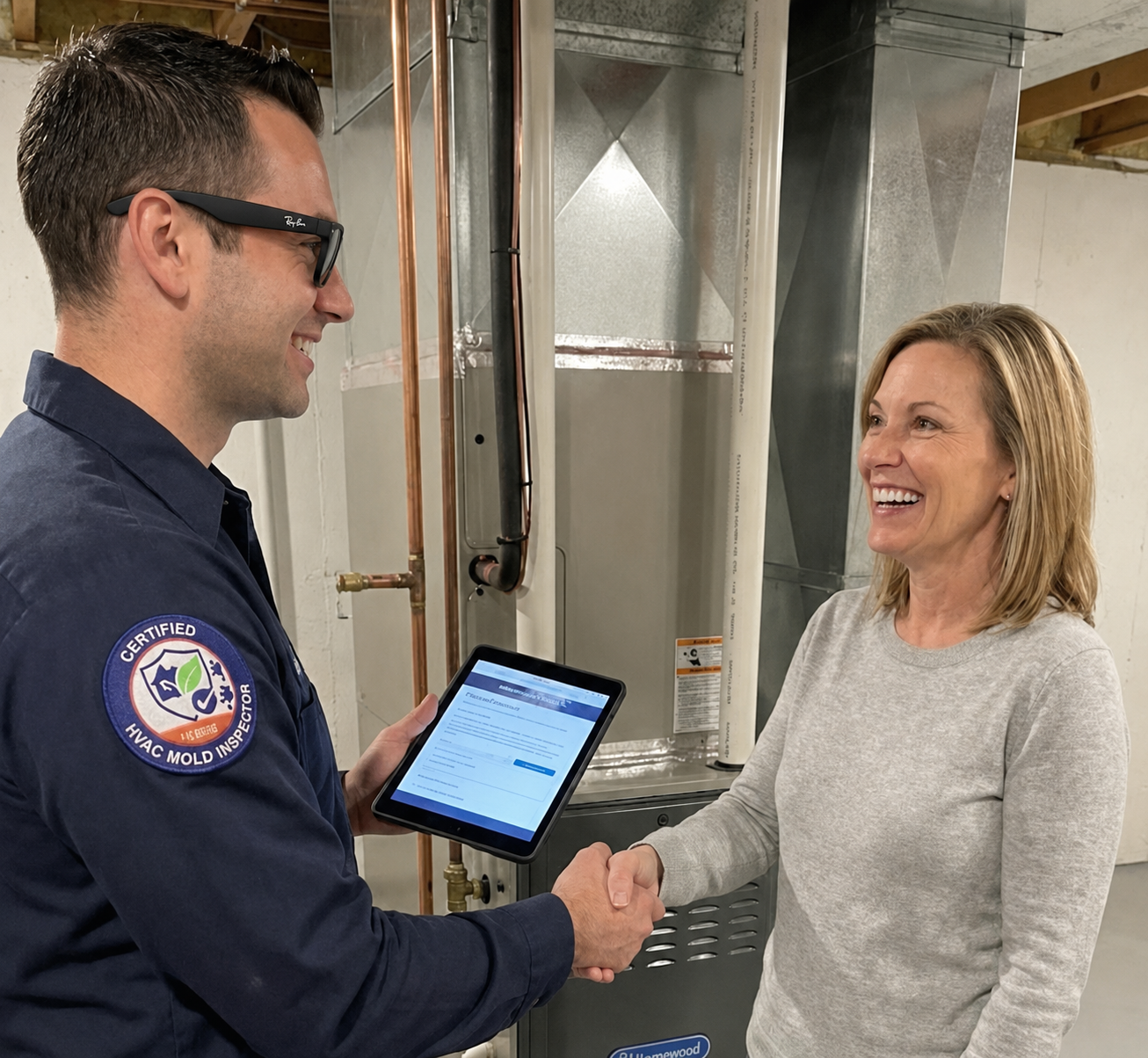
One custom report connects the technician’s HVAC inspection, photographs, Component Status decisions, sample locations, and independent laboratory findings — then gives the customer a clear path forward.
What enrollment includes — $497
Open a card for the full detail.
Inspection tools and equipment are not included. The course provides guidance on selecting and using appropriate field tools.
Enroll — $497Certification requirements
- Complete all 10 course modules
- Pass the 50-question final examination with a score of at least 80 percent
- Complete one documented HVAC Mold Sentinel field assignment
- Collect and submit the three required barcoded samples using the provided return label
- Receive approval of the field assignment and combined custom report
The certificate and Certified Inspector badge are issued only after the participant completes all 10 modules, passes the final examination, and receives approval of the field assignment.
Certification requirements do not replace applicable state or local licensing requirements.
Where this fits in your work
Add a structured HVAC mold assessment to service calls you already run. It fits naturally with fall and winter changeover visits, when a cooling season of condensation history is still visible in the equipment. Findings may support legitimate cleaning, repair, filtration, drainage, airflow, insulation, humidity-control, equipment, upgrade, and maintenance work.
Mold Sentinel Tools
The Right Tools Make Hidden Conditions Visible
Learn how to use practical HVAC inspection tools to see inside system components, identify moisture and temperature concerns, document findings, and collect samples when needed. Combined with Mold Sentinel, these tools help you move efficiently from inspection to an impressive pictorial report—before you leave the job site.
Click to watch on YouTube
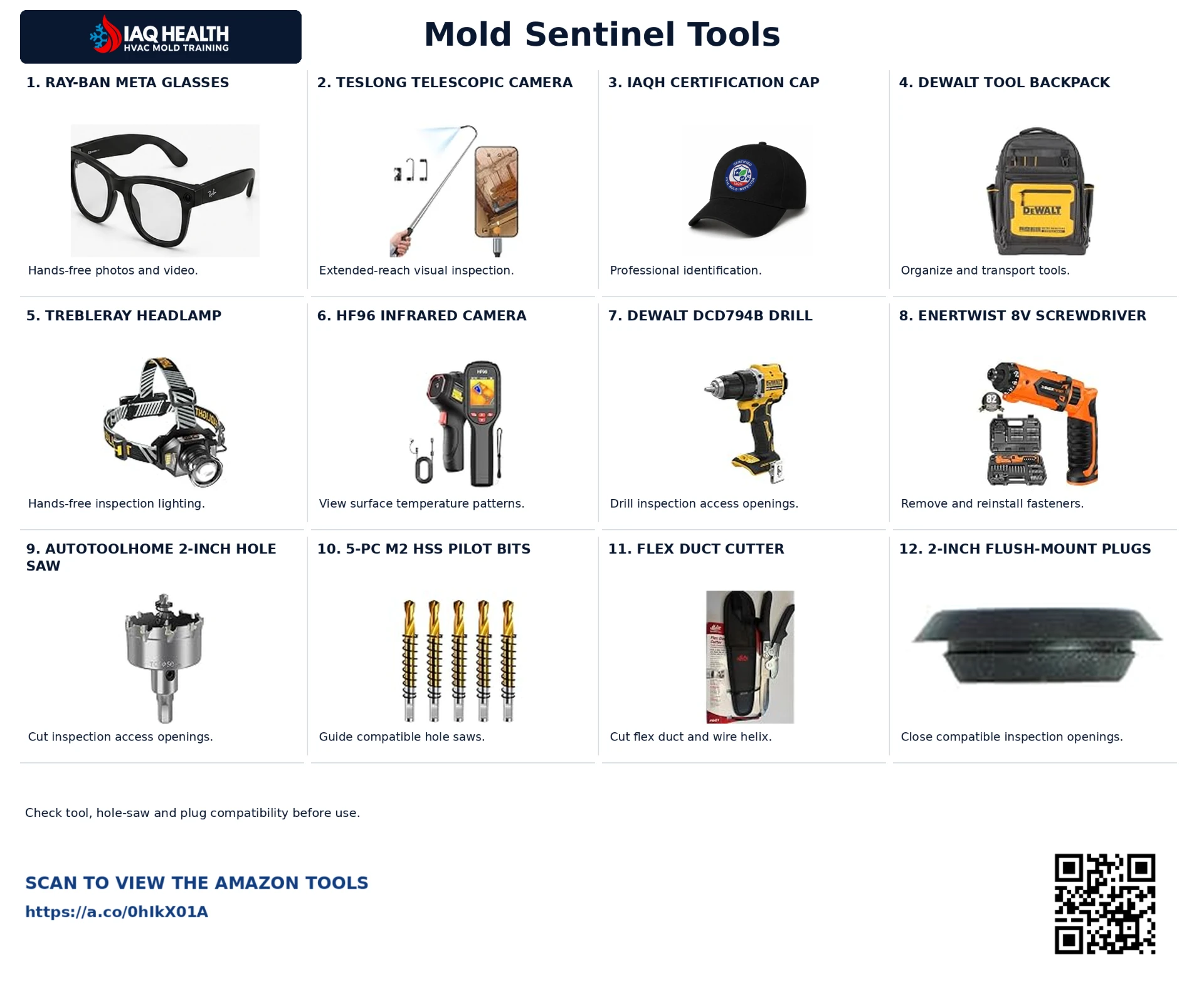

Taught by Steve McLeod
- Founder, Indoor Environmental Systems, Inc.
- 30+ years in HVAC hygiene, mold, moisture, and remediation
- Author, Finding Hidden Mold (2025)
- Creator of the IAQH HVAC Mold Inspection Certification Course (2026)
Scope, credential, and common questions
This course and Mold Sentinel are educational and documentation tools for HVAC hygiene and mold inspection within the participant’s permitted professional scope. They are not a state license and do not authorize regulated mold inspection, remediation, laboratory, or other professional services where licensing or additional qualifications are required. Participants are responsible for following applicable laws, regulations, licensing rules, ethical obligations, and employer requirements.
The IAQH HVAC Mold Inspection Certification is an educational credential developed and issued by Indoor Environmental Systems, Inc. It is not accredited or approved by a national certifying body. Continuing-education approval is in development and may be described publicly only when formally obtained and documented.
Become an IAQH HVAC Certified Mold Inspector
Ten modules, a documented field assignment, three complimentary laboratory analyses, and one professional report — $497.
IAQH HVAC Mold Inspection Certification
$497 · one year of access